When Being Real Becomes Your Biggest Career Move: Authenticity and the Trans Performer's Rise
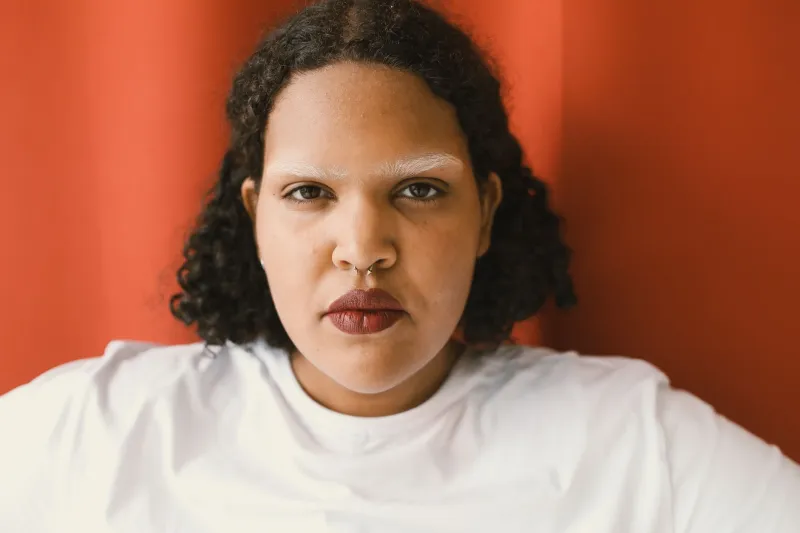
There's a moment a lot of trans performers describe — a pivot point where something clicks. Maybe it's the first shoot after starting HRT. Maybe it's the first time they introduced themselves on camera using their real name. Maybe it's just a Tuesday where they stopped pretending to be someone easier to market and leaned all the way into who they actually are.
Whatever the trigger, the effect tends to be the same: things start moving.
We're not talking about some soft, inspirational "just be yourself" energy here. We're talking about career trajectory. Subscriber counts. Retention. Loyalty. Real, tangible professional momentum that follows when trans performers stop performing around their identity and start performing from it.
The Inauthenticity Tax
Let's be honest about what it costs to hide.
A lot of performers — especially those who entered the industry before coming out or before they'd fully worked through their own identity — spent years packaging themselves in ways that didn't fit. They shot content that didn't reflect how they actually experienced their bodies. They used names that felt like costumes. They leaned into tropes and fantasies that were profitable on paper but hollow in practice.
And audiences could feel it, even if they couldn't name it.
Content that lacks genuine presence is content people consume once and forget. It doesn't build the kind of connection that turns a casual viewer into a loyal subscriber, a fan into a community member. When you're not actually there in your work — when you're just going through motions in a role that doesn't fit — you're leaving your most powerful asset on the table.
That asset is you. The real, specific, unrepeatable you.
The Pivot Moment: What Performers Actually Experience
Talk to enough trans performers who've been in the industry for a few years and you start to hear variations on the same story.
There's the performer who spent two years shooting content marketed almost entirely around novelty — the "surprise" angle, the gimmick framing that reduces trans bodies to a category rather than a person. Then she came out publicly, rebranded her platforms around her actual personality, her kinks, her sense of humor, and her real aesthetic preferences. Within six months, her subscriber retention had improved dramatically and her average tip amount went up. Not because she was doing more — because she was doing her.
There's the non-binary performer who'd been coding themselves as one thing for a mainstream-adjacent audience, then decided to stop softening their edges. They started making content that reflected their actual gender experience — fluid, sometimes ambiguous, always intentional. Their existing audience shrank a little at first. Their new audience was smaller but locked in. Revenue stabilized at a higher floor than before.
The pattern isn't universal, and it's not instant. But it's real.
What the Data Actually Suggests
The adult content economy increasingly rewards specificity. That's not an opinion — it's visible in how platforms function, how algorithmic discovery works, and how subscription models have restructured what "success" looks like for independent creators.
Broad appeal used to be the goal. Cast the widest possible net. Appeal to the most generic version of desire. That model still works for studio content with big production budgets and distribution deals. But for independent performers — which is most of the trans creator ecosystem — niche authenticity is a more durable strategy.
When a performer is genuinely, specifically themselves, they attract an audience that's genuinely, specifically into them. That audience churns less. They're more likely to tip, to buy custom content, to follow across platforms. They're more likely to talk about the performer to other people. They're building something that looks less like a customer base and more like a community.
Authenticity, in this context, is a competitive differentiator in a market that's absolutely flooded with content.
Timing It Right: Strategic Authenticity
Here's where it gets nuanced. "Just be yourself" is great advice but incomplete advice. How you bring your authentic self into your professional brand matters.
Some performers have found success in being transparent about their transitions in real time — documenting physical and emotional changes as part of their content, building audiences around a journey rather than a fixed persona. This approach works when the performer is genuinely comfortable with that level of visibility and when they've thought through the long-term implications.
Others have done the opposite: they've made their transition largely private, completed the work of figuring out who they are, and then brought that fully realized version of themselves to their professional platform. This approach works for people who need space to figure things out without an audience watching.
Both are valid. The key variable isn't the timing — it's the intentionality. Performers who've thought strategically about how to integrate their authentic identity into their brand tend to outperform those who either hide it indefinitely or overshare without a clear purpose.
Finding Your Niche After Coming Out
One of the most common career pivots in this space happens when a performer comes out — whether publicly or just internally — and suddenly has a clearer sense of what kind of content actually excites them.
This matters more than it might seem. Genuine arousal and genuine interest are visible on camera. Audiences respond to them. When a performer is making content that actually turns them on, that actually reflects their desires and their body in a way that feels good to them, that energy is contagious.
Finding your niche post-coming-out often means experimenting. It means maybe pivoting away from content categories you built your early career on, even if they were profitable. It means potentially losing some audience in the short term while building a more loyal one over time.
It's a real business decision with real tradeoffs. But for most performers who've done it, it's one they don't regret.
Longevity Is the Real Metric
The adult entertainment industry burns through performers who are only in it for a quick run. The ones who build actual careers — the ones still active and thriving five, eight, ten years in — tend to be the ones who've built something sustainable.
Sustainability, in this context, almost always comes back to authenticity. It's hard to maintain a persona indefinitely. It's hard to keep making content that doesn't reflect you without burning out. The performers who last are the ones who've figured out how to make their work feel like an extension of who they are rather than a performance of someone they're not.
For trans performers specifically, this often means the career really starts — the real career, the one with longevity built in — after the alignment happens. After the name change, the medical steps, the public acknowledgment, the internal work. After the moment where performing stops being about hiding and starts being about showing.
That's when the trajectory shifts. That's when the work gets good.
And that's when the audience shows up and stays.