Directing the Frame: How Trans Performers Are Seizing Creative Control and Rewriting Their Own Stories
There's a version of this industry that most trans performers know intimately — the one where someone else decides how you're lit, what you're called, how you're marketed, and ultimately, what story gets told about you. It's a version built around a gaze that was never yours to begin with. But something significant is shifting across adult entertainment right now, and if you're paying attention, you can see trans and non-binary performers not just pushing back against that framework — they're dismantling it entirely and building something new in its place.
This isn't just feel-good progress talk. It's a strategic, creative, and economic revolution happening in real time, driven by performers who got tired of waiting for the industry to catch up with who they actually are.
The Problem With Being Someone Else's Fantasy
Let's be honest about where a lot of trans representation in adult content has historically lived: in a box defined almost entirely by cisgender male fantasy. Performers were often cast as props in someone else's narrative — their bodies framed, their identities labeled with terms they didn't choose, their personalities flattened into a single marketable dimension. The content got clicks, sure. But it rarely reflected the actual complexity, humor, desire, or humanity of the people performing in it.
The cost of that arrangement goes beyond aesthetics. When you don't control your own image, you lose something real — the ability to shape how your audience sees you, what they expect from you, and ultimately, how much power you hold in the relationship. For trans performers especially, that loss of narrative control has historically translated into lower pay, shorter careers, and a ceiling on what kinds of opportunities were even considered possible.
The performers who figured this out earliest are now the ones running the game.
Owning the Camera Changes Everything
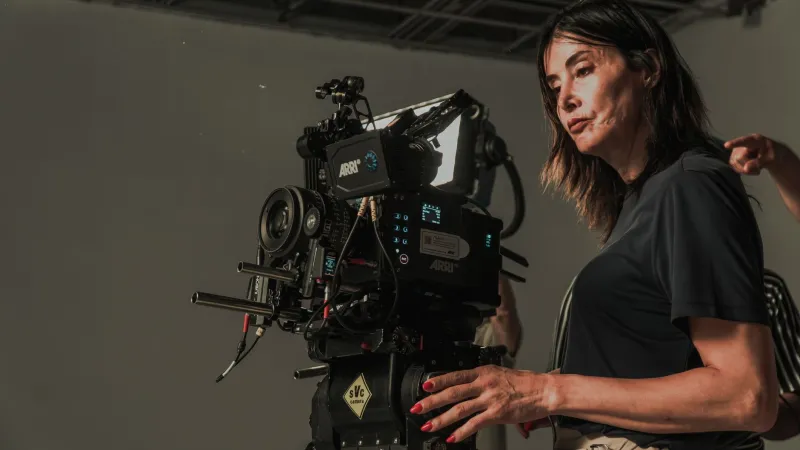
One of the most concrete shifts happening right now is production-level control. More trans performers are moving into directing, producing, and self-shooting their content — not just as a side hustle, but as a core business strategy. When you control the camera, you control the frame. You decide the lighting, the pacing, the mood, the narrative arc. You decide what your body looks like on screen and what story that image tells.
This matters more than people outside the industry often realize. The difference between content shot by someone else with an agenda and content you've directed yourself is visible — audiences feel it, even if they can't always articulate why. There's an authenticity to self-directed work that resonates on a deeper level, and trans performers are leveraging that resonance into genuine loyalty from their fan bases.
Platforms like OnlyFans, Fansly, and similar direct-to-fan spaces have made this kind of independence genuinely accessible in a way it wasn't a decade ago. The barrier to entry for high-quality self-produced content has dropped dramatically, and the smartest performers are treating that access like the gift it is.
Curation as a Power Move
Beyond production, trans performers are getting increasingly sophisticated about what they choose to put out into the world and where. Content curation — deciding which clips to release, which photos to share publicly versus behind a paywall, which collaborations to take and which to pass on — is a form of narrative control that doesn't always get talked about enough.
Every piece of content you release is a data point that tells your audience who you are. Performers who approach that intentionally, building a body of work that reflects a consistent creative vision, end up with audiences who feel like they actually know them. That parasocial connection is currency. It's what turns a casual viewer into a subscriber, and a subscriber into someone who's been with you for three years and buys everything you drop.
Trans and non-binary performers are increasingly thinking like brand strategists in this regard — not in a corporate, sanitized way, but in the sense of understanding that every creative decision is also a positioning decision. What you put your name on shapes what your name means.
Bypassing the Gatekeepers
Traditional adult studios have always functioned as gatekeepers — controlling distribution, setting rates, and deciding which performers got visibility and which ones stayed stuck in the background. For trans performers, those gates were often harder to get through, and the terms on the other side were frequently worse.
The direct-to-fan model doesn't just change the economics (though the economics are genuinely better for many performers). It changes the power dynamic at a fundamental level. When you're selling directly to your audience, you don't need a studio executive to decide you're marketable. You don't need a distribution platform to categorize you in a way that flattens your identity. You need your people — and you can find them, build relationships with them, and create content specifically for them without anyone else's approval.
Social media, even with all its frustrating restrictions on adult content creators, plays a role here too. Performers are using platforms like Twitter/X, Instagram, and TikTok not to sell content directly, but to build personality-driven audiences who then follow them to monetized spaces. The funnel is self-constructed, self-managed, and owned entirely by the performer. That's a fundamentally different position than waiting to be cast.
The Language of Self-Definition
There's also something worth naming about language and labeling. Trans performers are increasingly vocal about the terms used to describe them — both in titles and tags on content platforms and in how media and press talk about their work. This might seem like a small thing, but it has real downstream effects on search, discoverability, and the associations that build up around a performer's name over time.
Choosing your own descriptors, insisting on accurate representation in how your content is categorized, and being willing to correct outlets or platforms that get it wrong — these are acts of narrative control that compound over time. Performers who've been consistent about this tend to attract audiences who are genuinely aligned with who they are, rather than audiences who showed up based on a misrepresentation and don't actually connect with the real person behind the content.
What This Looks Like Going Forward
The performers who are thriving right now aren't just talented on camera — they're thoughtful about story. They understand that in an oversaturated content landscape, the thing that cuts through is specificity and authenticity. They're not trying to be everything to everyone. They're building something real, for an audience that genuinely wants them specifically.
That's the gaze game, flipped. Instead of being looked at through someone else's lens, trans performers are picking up the camera, deciding what's worth capturing, and inviting audiences into a world they built themselves.
And honestly? That content hits different. You can feel the difference between someone performing a role that was written for them and someone who's fully in charge of their own story. Audiences feel it too — which is exactly why this shift isn't just culturally important. It's smart business.